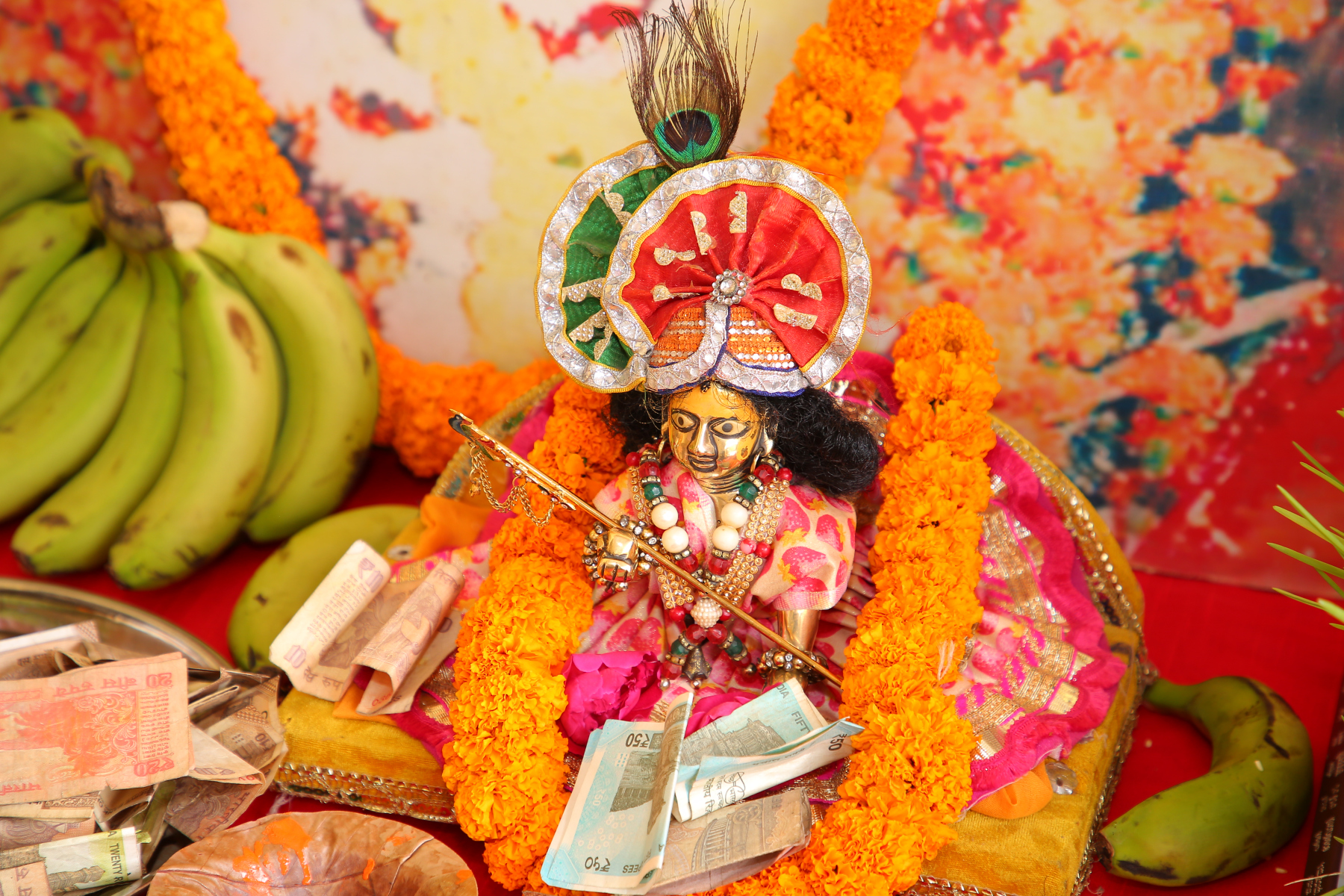
Shree Panchmukhi Hanuman Mandir is a revered Hindu temple located in Vill. Basatian Wala, on the Bilaspur–Chhachhrauli Road in Yamunanagar district, Haryana. The temple enshrines the magnificent five-faced form of Lord Hanuman — Panchmukhi Hanuman.
Founded in 1978, the temple was established with a humble vision — to create a spiritual abode where devotees could seek the blessings of Lord Hanuman in His most powerful manifestation. Over the decades, the temple has flourished into a grand centre of faith and devotion, attracting thousands of pilgrims from across Haryana and neighbouring states.
The presiding deity, Panchmukhi Hanuman Ji, is enshrined in a magnificent idol that radiates divine energy. The idol features five faces — Hanuman (east), Narasimha (south), Garuda (west), Varaha (north), and Hayagriva (skyward) — symbolizing omnipresent protection and divine grace.
The temple is managed by the Shree Panchmukhi Hanuman Mandir Trust, which oversees all religious activities, events, and welfare programs.
Panchmukhi Hanuman is the five-faced manifestation of Lord Hanuman. "Panch" means five and "Mukhi" means faces. This divine form emerged during the battle with the demon Ahiravana in the Ramayana.
During the war of Lanka, the demon sorcerer Ahiravana (or Mahiravana), the lord of Patal Loka, abducted Lord Rama and Lakshmana and took them to the netherworld. To rescue them, Hanuman descended into Patal Loka.
There, Hanuman discovered that to defeat Ahiravana, he had to extinguish five lamps burning simultaneously in five different directions. Since a single-faced being could not extinguish lamps in all directions at once, Lord Hanuman assumed the Panchamukha (five-faced) form.
With five faces looking in five directions — East, West, North, South, and Upward — Hanuman Ji extinguished all five lamps simultaneously, defeated Ahiravana, and rescued Lord Rama and Lakshmana.
The monkey face represents purity, devotion and humility. Worshipping this face removes past sins and grants a focused, pure mind.
The lion-man face represents fearlessness. Facing the direction of Yama (death), it grants protection from enemies and evil forces.
The eagle face signifies speed, vigilance and protection. It wards off evil spells, black magic, poisonous influences and illness.
The boar face represents the power to uplift and restore. Associated with removing bad luck and the restoration of wealth and prosperity.
The horse face represents divine knowledge and wisdom. It grants spiritual clarity, success in education, and supreme enlightenment.
To maintain a sacred temple environment, organize devotional programs, and serve the spiritual needs of the community.
Free langar (community kitchen), support for the poor, and distribution of prasad during all major festivals and events.
Organizing grand annual Maha Jagrans, Hanuman Jayanti celebrations, Sundarkand Path, and Navratri Jagran every year.
Shree Hanuman Chalisa – Written by Goswami Tulsidas
श्रीगुरु चरन सरोज रज, निज मनु मुकुरु सुधारि।
बरनउँ रघुबर बिमल जसु, जो दायकु फल चारि॥
बुद्धिहीन तनु जानिके, सुमिरौं पवन-कुमार।
बल बुद्धि बिद्या देहु मोहिं, हरहु कलेस बिकार॥
जय हनुमान ज्ञान गुण सागर।
जय कपीस तिहुँ लोक उजागर॥
रामदूत अतुलित बल धामा।
अंजनि-पुत्र पवनसुत नामा॥
महाबीर बिक्रम बजरंगी।
कुमति निवार सुमति के संगी॥
कंचन बरन बिराज सुबेसा।
कानन कुंडल कुँचित केसा॥
हाथ बज्र औ ध्वजा बिराजै।
काँधे मूँज जनेऊ साजै॥
शंकर सुवन केसरी नंदन।
तेज प्रताप महा जग बंदन॥
विद्यावान गुनी अति चातुर।
राम काज करिबे को आतुर॥
प्रभु चरित्र सुनिबे को रसिया।
राम लखन सीता मन बसिया॥
सूक्ष्म रूप धरि सियहिं दिखावा।
बिकट रूप धरि लंक जरावा॥
भीम रूप धरि असुर संहारे।
रामचंद्र के काज सँवारे॥
लाय सजीवन लखन जियाये।
श्रीरघुबीर हरषि उर लाये॥
रघुपति कीन्ही बहुत बड़ाई।
तुम मम प्रिय भरतहि सम भाई॥
पवनतनय संकट हरण, मंगल मूरति रूप।
राम लखन सीता सहित, हृदय बसहु सुर भूप॥